
Ray Deck
Strategic Clarity · Deep Technical Expertise
I see what's actually
blocking you.
Founders and technical leaders hire me when they need someone who can diagnose the real problem — not just the symptoms — and move them forward fast. 25 years of building, leading, and fixing software-driven businesses.
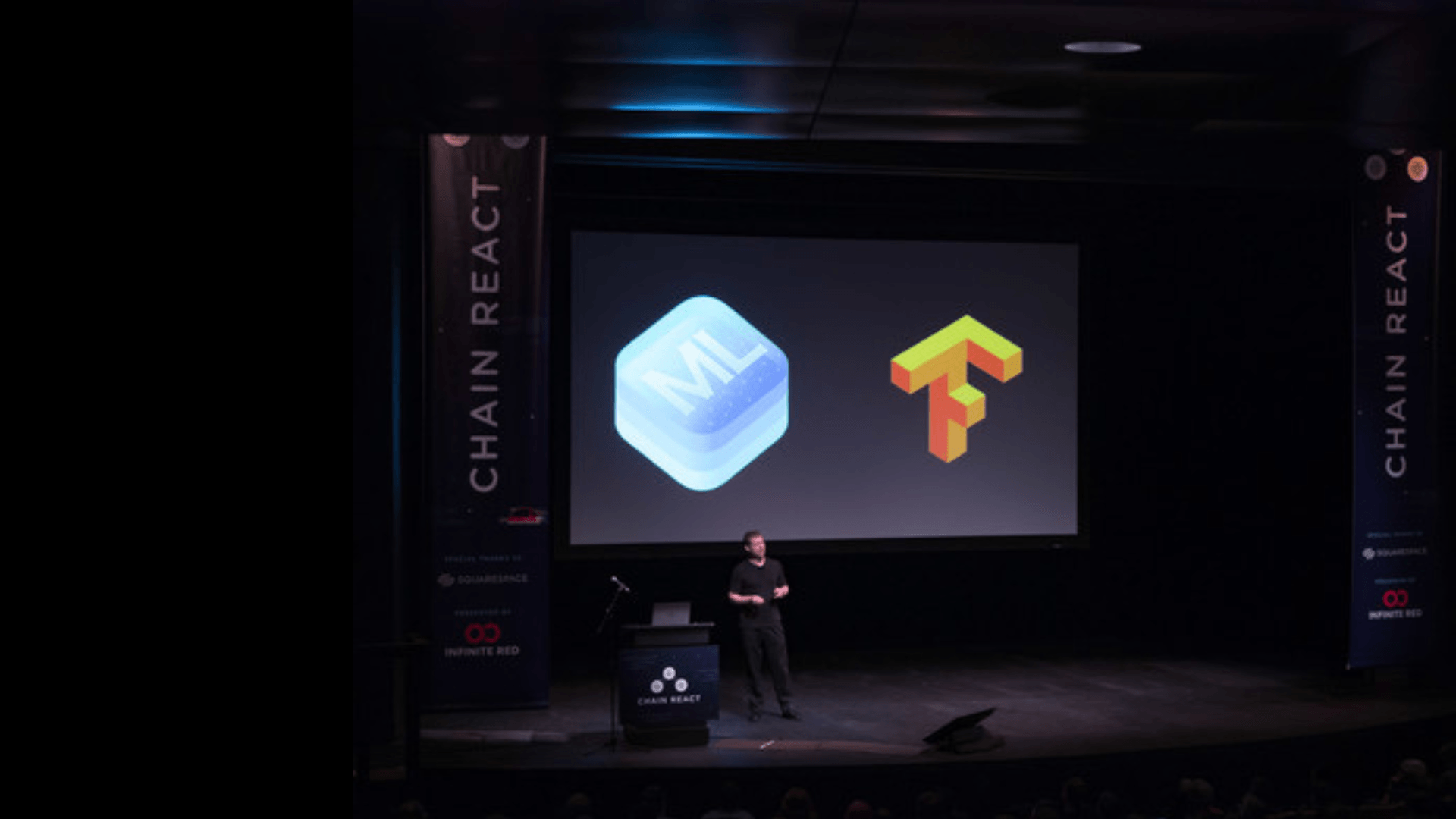
Speaking at Chain React on ML and mobile AI
What I Do
Where AI, strategy, and performance meet.
Most consultants pick one lane. I work at the intersection — because the biggest breakthroughs happen when you see that your performance problem is actually a strategy problem, or your strategy problem is actually an AI problem. Short, sharp engagements that create outsized value fast.
Cut the cost. Keep the value.
Your system is slow, expensive, or both — but not everything in it matters equally. I find the 20% that's generating real value, carve it off from the rest, and rebuild it to run at a fraction of the cost. One client was pushing 150+ requirements through a dashboard bottlenecked by interpreter overhead. We extracted the computation engine into Lambda functions — same output, dramatically less infrastructure.
What this looks like
- Xano performance crises resolved without switching platforms
- Multi-gigabyte data warehouses architected for speed
- Infrastructure costs cut by isolating what actually needs to be fast
Know what to kill.
80% of your engineering effort is maintaining features only 5% of your users touch. The hardest strategic decision isn't what to build — it's what to stop building. I help you see which parts of your product create disproportionate value, so you can focus there and drop the rest. That's not just cost optimization — it changes your go-to-market, your pricing, and what your team works on Monday morning.
What this looks like
- "Autonomous backend" → "observability platform" — new category, new revenue
- Identify which customer segments are worth protecting vs. commodity
- Kill projects that look productive but dilute your edge
AI changes everything. But not the way you think.
AI isn't a feature you bolt on. It changes which problems are worth solving and which manual processes are hiding massive margin. I help you find where AI creates real leverage — not the flashy demo, but the boring Tuesday-morning spreadsheet task that takes 3 hours and holds budget authority. That's where the ROI lives, and it compounds.
What this looks like
- Weeks of debugging replaced with an afternoon using Claude Code
- Manual processes automated where the real margin hides
- AI strategy that starts with the business problem, not the model
What It Looks Like
The reframe is the product.
Most people describe their problem one way. The actual problem is something else entirely. Here's what that looks like in practice.
They said
“We have an autonomous backend”
I saw
“You have an observability platform — name it that and your entire go-to-market changes.”
They said
“We've been debugging this WeWeb + 3D integration for weeks”
I saw
“Wrong tool. Use Claude Code — you'll have it done this afternoon.”
They said
“We're spending too much on Xano and it's still slow”
I saw
“Your data model is the bottleneck, not the platform. Here's the fix.”
How I Work
Short and sharp.
I work with you live. You drive — I don't take over your keyboard. You'll always know exactly where your time went, because you were right there.
We learn together. I take on hard problems that usually nobody has solved in the particular way you need. You leave with my diagnostic techniques and mental models — not a dependency on me.
Clarity Sessions
Hours, not days
Bring your stuck problem. I diagnose, reframe, and give you a clear next step. Most people walk away saying they got more value in one hour than weeks of going in circles.
My guarantee: if it's not worth it in the first 15 minutes, we part friends.
Accelerator
10 hours over 1–2 weeks
For bigger challenges — shipping a complex feature, rearchitecting a system, solving a performance crisis. Daily sessions for a week, then we run the ball. Cracked in the first week, shipped in the second.
Recent projects: multi-GB data warehouse, automated real estate valuation system.
Ongoing Advisory
When you need a recurring strategic partner
Monthly deep sessions plus async access. For companies where having a technical strategist on call prevents the kind of mistakes that cost quarters, not days.
Reserved for a small number of companies. By application.
Wall of Love →
Hundreds of people.
One consistent thing they say.
“He sees what I couldn't see.” I've helped hundreds of builders, founders, and technical leaders get unstuck — and they keep coming back.
“Ray could be an actual genius. Amazing at working through things on the fly and explaining how they work and suggesting improvements.”
— Roc Stevenson
“High level teacher. Ray gave me an overview of the way I was approaching my project and kept me from reinventing the wheel. So much better than someone just doing what I said and wasting my time and money.”
— Bernard L. Richter
“Ray not only helps me find solutions, but he demonstrates why things work. His explanations mean I am also growing as a developer. Highly recommended!”
— Jordan Belafonte
“State Change has played a defining role in our journey building this product. My cofounders and I struck gold when we came across it.”
— Haley Wulfman
“Very helpful in rethinking some architecture decisions on my backend setup.”
— Nicholas Arner
“Really well explained, very patient and polite with lots of knowledge and experience. You get serious value for money.”
— James Piner
“Ray could be an actual genius. Amazing at working through things on the fly and explaining how they work and suggesting improvements.”
— Roc Stevenson
“High level teacher. Ray gave me an overview of the way I was approaching my project and kept me from reinventing the wheel. So much better than someone just doing what I said and wasting my time and money.”
— Bernard L. Richter
“Ray not only helps me find solutions, but he demonstrates why things work. His explanations mean I am also growing as a developer. Highly recommended!”
— Jordan Belafonte
“State Change has played a defining role in our journey building this product. My cofounders and I struck gold when we came across it.”
— Haley Wulfman
“Very helpful in rethinking some architecture decisions on my backend setup.”
— Nicholas Arner
“Really well explained, very patient and polite with lots of knowledge and experience. You get serious value for money.”
— James Piner
“I cannot recommend Ray enough. He is more expensive than some of the other mentors I have worked with, but I think he winds up being a lot cheaper. He grasps what I am trying to do very quickly.”
— Gregg Squire
“Ray is obviously a very experienced and knowledgeable guy, easily able to navigate between low level coding problems and higher level conceptual ones. Highly recommended when you need to get to the root of thorny issues.”
— Josh Kramer
“Ray was able to expertly articulate the solutions to my problems in an educational way that allowed me to learn not only what to do, but why to do it.”
— Kirill Mikhailov
“I wasted 30+ hours trying to solve an image upload challenge. Ray not only knew what to look for, but answered all — ALL — my questions.”
— Eddy M.
“Excellent help — Ridiculously knowledgeable — Would highly recommend.”
— Thomas McMurrain
“I cannot recommend Ray enough. He is more expensive than some of the other mentors I have worked with, but I think he winds up being a lot cheaper. He grasps what I am trying to do very quickly.”
— Gregg Squire
“Ray is obviously a very experienced and knowledgeable guy, easily able to navigate between low level coding problems and higher level conceptual ones. Highly recommended when you need to get to the root of thorny issues.”
— Josh Kramer
“Ray was able to expertly articulate the solutions to my problems in an educational way that allowed me to learn not only what to do, but why to do it.”
— Kirill Mikhailov
“I wasted 30+ hours trying to solve an image upload challenge. Ray not only knew what to look for, but answered all — ALL — my questions.”
— Eddy M.
“Excellent help — Ridiculously knowledgeable — Would highly recommend.”
— Thomas McMurrain
“Ray went way above and beyond. He is extremely knowledgeable regarding OAuth2 and dev work. He also worked after the session was over to solve a problem that we couldn't figure out with weeks of work. 10/10.”
— Michael Willcockson
“Ray is awesome. He asks pointed questions that get to the heart of the issue and helps you brainstorm through the issues. He also has great technical expertise. Overall, I rate him 10/10!”
— Ali Zaheer
“Ray is an excellent resource. He has the ability to breakdown complex technical solutions into digestible explanations.”
— Ali Zaheer
“He broke it down for me in an understandable way & quickly. I had calls with 2 different mentors who said it wasn't possible... Now time to implement. Thanks!”
— J. K.
“Ray is truly a mentor. He is not only versed technically, but is an excellent guide in navigating and preparing for career goals.”
— Mike G
“Ray went way above and beyond. He is extremely knowledgeable regarding OAuth2 and dev work. He also worked after the session was over to solve a problem that we couldn't figure out with weeks of work. 10/10.”
— Michael Willcockson
“Ray is awesome. He asks pointed questions that get to the heart of the issue and helps you brainstorm through the issues. He also has great technical expertise. Overall, I rate him 10/10!”
— Ali Zaheer
“Ray is an excellent resource. He has the ability to breakdown complex technical solutions into digestible explanations.”
— Ali Zaheer
“He broke it down for me in an understandable way & quickly. I had calls with 2 different mentors who said it wasn't possible... Now time to implement. Thanks!”
— J. K.
“Ray is truly a mentor. He is not only versed technically, but is an excellent guide in navigating and preparing for career goals.”
— Mike G
These are a fraction of the hundreds of testimonials from real clients. See the full wall →
About Ray
Builder. Teacher. Student.
I'm a 25-year veteran of software and data science. I've grown teams of technologists across generations of technology as a founder, CTO, and consultant to Fortune 500 companies. I've built software companies worth millions and angel-invested in others.
That breadth — from Solidity smart contracts to OAuth integrations to SpriteKit geometry to data warehousing — is what lets me see connections other specialists miss. It's a practicing intellectual life: building, teaching what I learn, and constantly consuming new ideas to sharpen the next conversation.
25+
Years in software
500+
Builders helped
500+
Books since 2020
1,800+
Session hours
Teacher
State Change
I founded State Change to teach what I know — an AI mentorship community where I work the hardest problems live, every week. 1,800+ hours of archived sessions, 500+ builders helped, and an AI mentor trained on my mental models.
Explore State Change →Student
500+ Books and Counting
Since 2020, I've averaged about 100 books a year — audiobooks, lecture series, college courses. Not all of equal value, and I read plenty where I disagree with the author. Everything adds perspective, and the ideas compound. A previous book gives me a leg up on how I understand the next one.
See what I've been reading →Ready to get unstuck?
Tell me what you're working on. I'll send you my rate card and we can figure out the right way to work together — whether that's a single session or something deeper.